
The global gig economy is projected to reach $455 billion — yet millions of young people in emerging markets remain locked out of it. Not because they lack talent. Because they lack a structured pathway from potential to participation. UniHouse's Workforce & Entrepreneurship Engine™ (WEE) was built to change that.
The Global Digital Skills Gap Is Not a Training Problem — It Is a Pathway Problem
Governments, international organisations, and development banks have invested billions in digital skills training over the past decade. And yet the gap between trained and employed — between certified and earning — remains stubbornly wide. According to the International Labour Organization, youth unemployment in many emerging economies exceeds 30%, even as employers report acute shortages of qualified digital talent.
The problem is not a shortage of training. It is a shortage of structured pathways. Most workforce programmes train people and stop. They issue a certificate and consider the job done. What they fail to do is bridge the critical gap between capability and economic participation — between knowing how to do something and actually getting paid to do it.
This is the gap the UniHouse Workforce & Entrepreneurship Engine™ (WEE) was designed to close.
"Most workforce programmes train people and stop. WEE was designed to take people all the way — from the first point of outreach to sustained income in the global digital economy."
| $455B | 1.5B | 70%+ |
|---|---|---|
| Global gig economy projected value | Freelancers in global workforce by 2025 | Youth lacking formal digital credentials |
What Is the WEE™ Framework?
The UniHouse Workforce & Entrepreneurship Engine™ (WEE) is an integrated, eight-stage implementation framework that moves beneficiaries from initial outreach through to sustained income generation within the global digital economy. It is not a training programme with employability support added on. It is a single, end-to-end model in which every stage builds the conditions for the next — and every stage is supported by purpose-built digital infrastructure.
At the heart of the model is Ostathi — UniHouse's proprietary digital marketplace — which provides the platform infrastructure through which beneficiaries build their professional identity, publish their services, attract clients, and receive payments from anywhere in the world.
The Eight Stages: A Structured Pathway From Outreach to Income
Each stage of the WEE framework has a defined purpose, measurable outputs, and a direct link to the next stage. Together they form a seamless pathway that leaves no beneficiary stranded between training and earning.
Stage 01 — Engage: Reaching the Right People at Scale
The WEE pathway begins with a dedicated beneficiary funnel page — a purpose-built digital landing page through which potential participants discover the programme and apply. This is supported by targeted social media and Google Ads campaigns deployed at country or regional level. From the very first touchpoint, the model is digital, data-driven, and inclusive by design — with specific outreach strategies for women, youth, and displaced communities.
Stage 02 — Identify: Evidence-Based Targeting, Not Assumptions
Every applicant completes a structured digital intake assessment, generating the baseline data that powers all subsequent measurement. A real-time campaign analytics dashboard aggregates application data and informs cohort decisions. Beneficiaries are segmented by readiness level and allocated to appropriate training tracks — ensuring the programme delivers the right content to the right people from day one.
Stage 03 — Develop: Training That Is Governed, Not Just Delivered
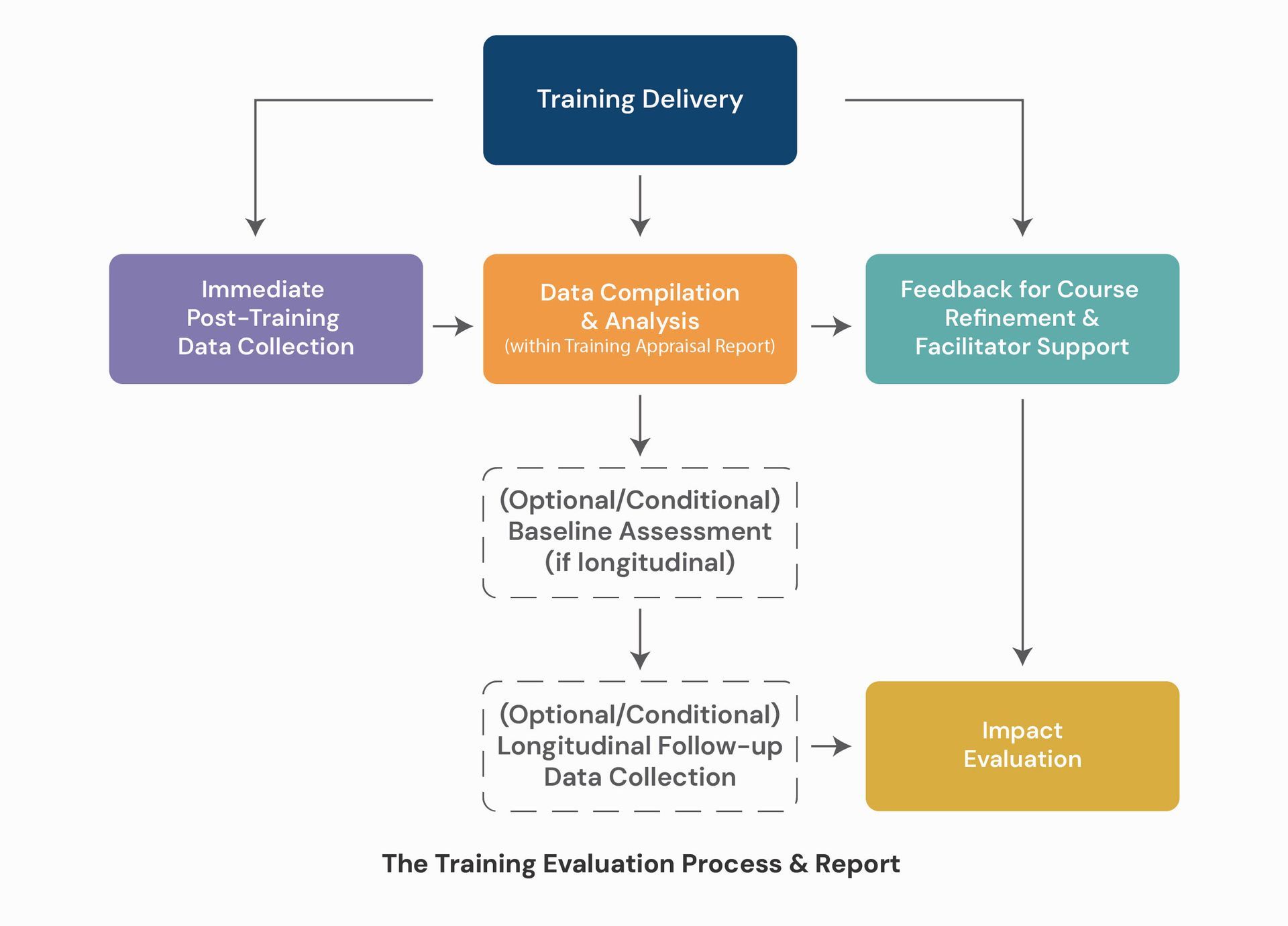
Skills development is delivered through a dedicated online training platform — accessible in low-bandwidth environments, tracking every module, assessment, and competency milestone. All training is governed by the UniHouse Capacity Development Evaluation Framework (CDEF). Training tracks include digital marketing, coding, data analysis, UI/UX design, cybersecurity, and freelancing readiness — aligned to real occupational demand in the global gig economy, as identified by the World Economic Forum's Future of Jobs Report.
Stage 04 — Activate: The Stage Most Programmes Skip
After completing skills training, most programmes consider the job done. WEE does not. The Activate stage addresses the most common failure point in workforce development: the gap between knowing how to do something and earning money from it. Beneficiaries define their service offerings, develop pricing strategies, and build the entrepreneurial mindset required to operate as independent professionals. A dedicated Gig Economy Readiness module prepares them for platforms like Ostathi, Upwork, and Fiverr.
Stage 05 — Brand: Solving the Trust Gap
The Brand stage gives each graduate two critical assets: a digitally verifiable certificate — issued upon successful CDEF completion and tamper-proof — and a dedicated Ostathi profile URL consolidating their credentials, portfolio, and service offerings into a single, professionally presented digital identity. When a client searches for a digital professional, a WEE graduate has a credible, findable profile backed by a verified credential.
Stage 06 — Launch: From Preparation to Participation
Graduates are formally activated on the Ostathi marketplace in a structured, quality-checked go-live process. Simultaneously, paid personal promotion campaigns are activated to drive client traffic to individual profiles — accelerating time-to-first-client and reducing the cold-start problem that causes most freelancers to give up before earning their first income.
Stage 07 — Earn: Where Impact Becomes Measurable
Beneficiaries secure clients, deliver services, and receive digital payments through Ostathi's integrated payment gateway — enabling income from clients anywhere in the world. A mentorship programme pairs each graduate with an experienced professional, internship placements connect graduates with private sector partners, and alumni peer networks sustain engagement. Because income flows through the Ostathi platform, every payment is verified — meeting the evidentiary standards of the International Finance Corporation (IFC) and the World Bank.
Stage 08 — Grow: Beyond First Income to Sustainable Livelihoods
The final stage supports beneficiaries in scaling their economic activity — building repeat client relationships, expanding service offerings, and transitioning where appropriate toward formal business registration. The full CDEF measurement infrastructure is handed over to the implementing partner as a live operational system, enabling outcome tracking to continue long after the programme period ends.
CDEF: The Measurement Architecture That Makes WEE Accountable
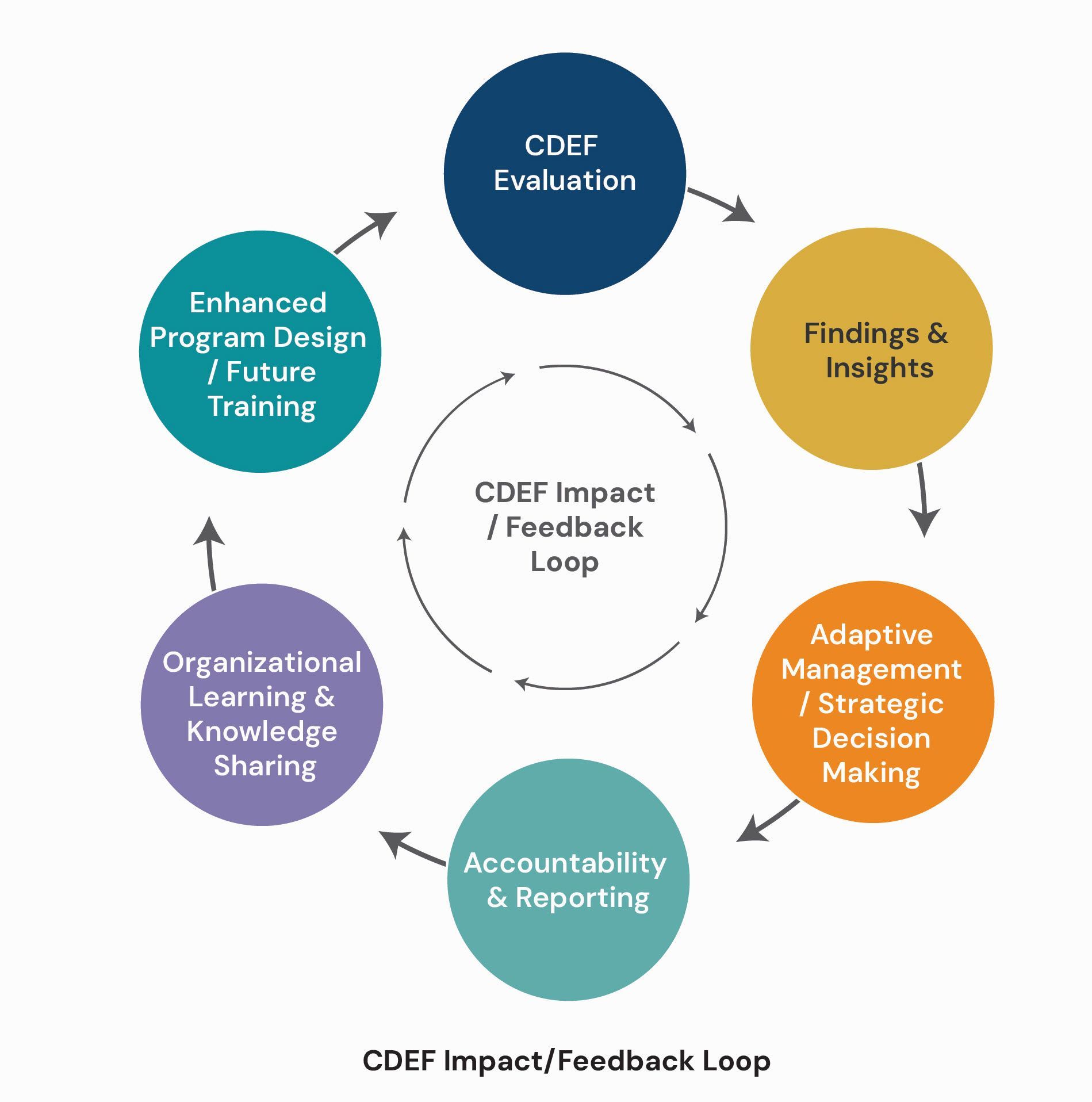
One of the most distinctive features of the WEE framework is the
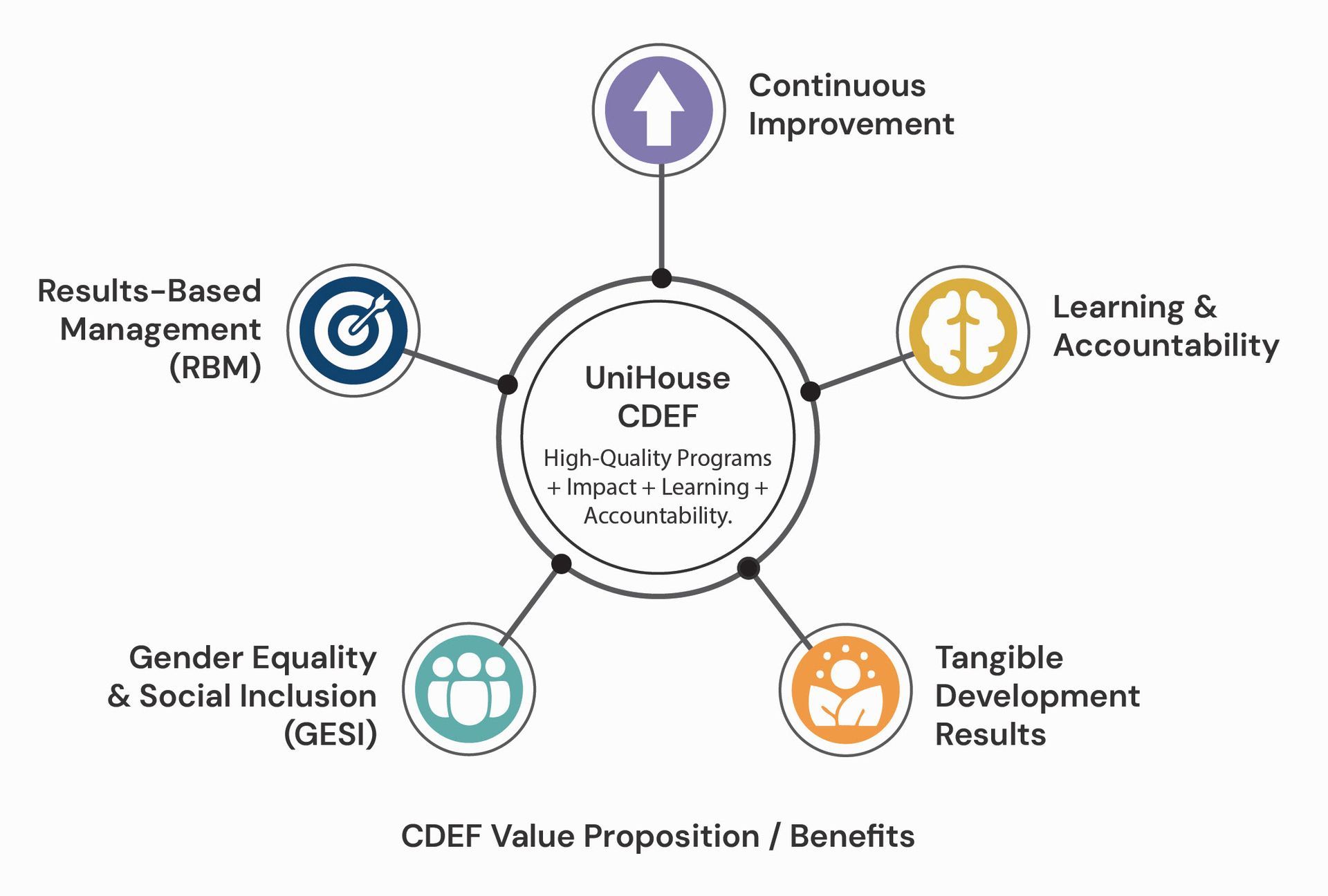
UniHouse Capacity Development Evaluation Framework (CDEF) — a cross-cutting quality assurance and measurement architecture that runs across all eight stages. CDEF is what separates WEE from a programme that claims impact from one that can prove it.
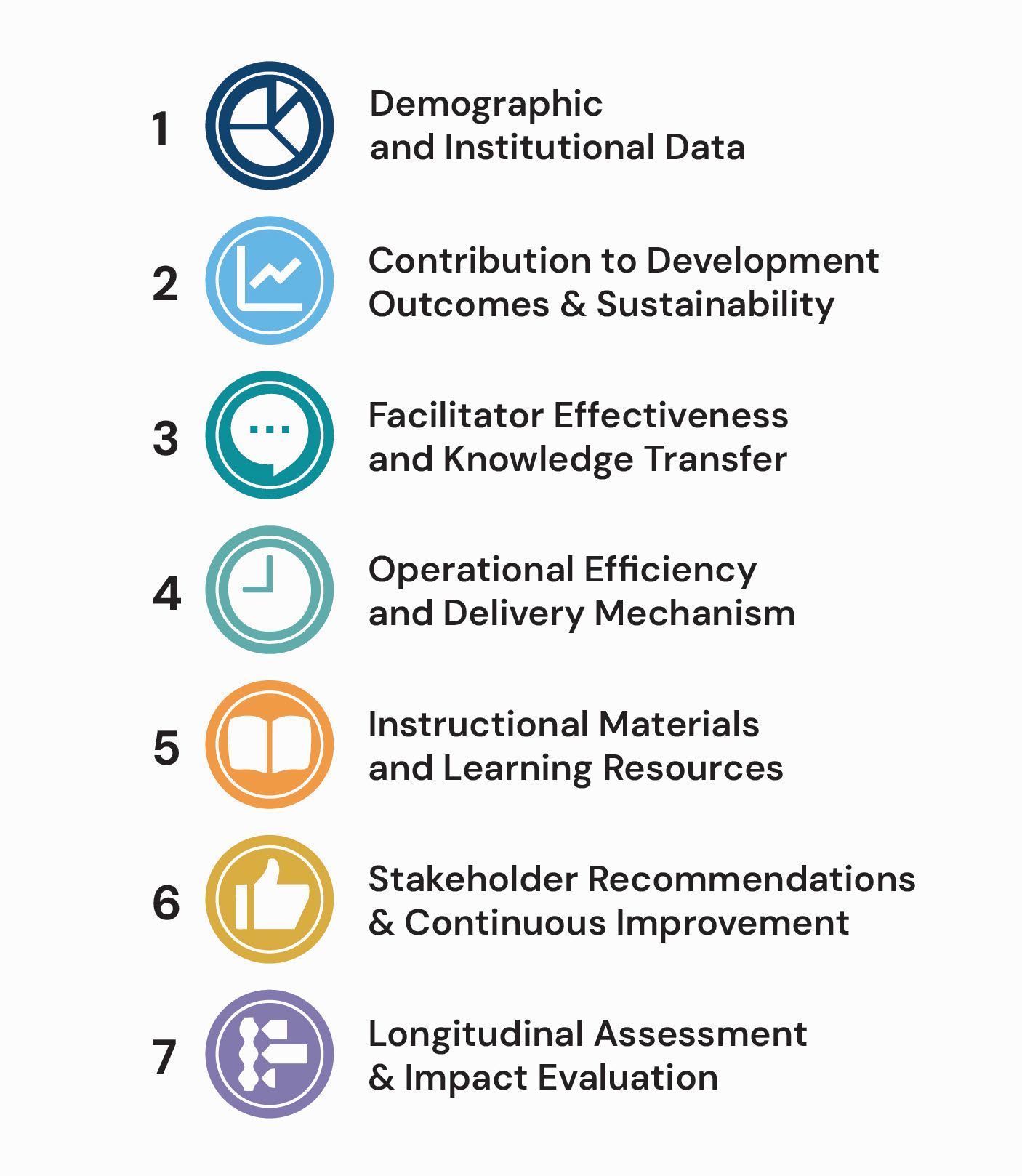
What CDEF measures — across five levels of the results chain
- Input indicators: Enrolment numbers, demographics, and baseline competency data — collected digitally at intake and disaggregated by gender, location, and beneficiary type from day one.
- Process indicators: Attendance, engagement, module completion, and retention rates — tracked automatically through the online training platform throughout delivery.
- Output indicators: Certifications issued, Ostathi profiles activated, and platform services published — verified through platform data, not self-reporting.
- Outcome indicators: Internships secured, freelance contracts obtained, and income generated — verified through Ostathi transaction records and employer confirmation.
- Impact indicators: Sustained income growth, client retention, and business formalisation — tracked through tracer surveys and Ostathi platform data at 3, 6, and 12 months post-programme.
11 Digital Enablers: The Infrastructure Behind the Pathway
WEE is not just a programme model — it is a fully integrated digital delivery system. Eleven purpose-built digital enablers support every stage of the beneficiary journey, from the first point of contact through to the receipt of income from global clients.
| # | Digital enabler | WEE stage | What it does |
|---|---|---|---|
| 1 | Beneficiary funnel page | Engage | Programme discovery, application, and first data capture |
| 2 | Social media & Google Ads | Engage | Targeted paid outreach at country or regional scale |
| 3 | Campaign analytics dashboard | Identify | Real-time campaign performance and demographic data |
| 4 | Digital outreach & comms system | Identify | All beneficiary communications - selection, onboarding |
| 5 | Digital selection & notification tool | Identify | Structured, documented selection outcome communications |
| 6 | Online training platform | Develop | Full training delivery - synchronous, asynchronous, low-bandwidth |
| 7 | Dedicated Ostathi profile URL | Brand | Permanent verified professional identity on the marketplace |
| 8 | Digital verifiable certificate | Brand | Tamper-proof, shareable credential backed by CDEF assessment |
| 9 | Ostathi marketplace | Launch / Earn | Service publishing, client matching, order management |
| 10 | Paid personal promotion campaigns | Launch / Earn | Individual profile promotion to relevant client audiences |
| 11 | Digital payment gateway | Earn / Grow | Receive payments from clients anywhere in the world |
WEE as a Solution for the Global Gig Economy
Platforms like Upwork, Fiverr, and Toptal have created a genuinely global labour market in which a graphic designer in Amman can serve a client in Amsterdam, or a data analyst in Nairobi can work for a startup in New York. Geography is no longer a barrier to economic participation.
But accessing this opportunity requires more than a skill. It requires a verified credential that a client trusts, a professional digital presence that converts browsing into hiring, a pricing strategy that reflects market value, and a platform through which to transact securely. WEE provides all four — systematically, sequentially, and at scale.
The Ostathi platform extends WEE's reach beyond a single geography: a beneficiary trained through Ostathi Jordan can serve clients across the MENA region and globally, receiving payments digitally through the platform's integrated gateway.
"Geography is no longer a barrier to economic participation. WEE and Ostathi together give beneficiaries the credentials, presence, and platform to compete in a genuinely global digital marketplace."
Why WEE Is Different From Conventional Workforce Development Programmes
Most workforce programmes operate on one of two flawed assumptions: that training alone creates employment, or that job placement alone creates livelihoods. WEE rejects both.
- Training without activation produces certified unemployed graduates. WEE adds four stages after training — Activate, Brand, Launch, and Earn — specifically to prevent this outcome.
- Placement without sustainability produces one-time income events. WEE's Grow stage and long-term CDEF tracking ensure that first income is the beginning of a livelihood, not the end of a programme.
- Measurement without verification produces self-reported data that funders increasingly distrust. WEE's Ostathi-generated income data is verified through transaction records — auditable, attributable, and credible.
- Physical delivery without digital infrastructure limits reach and creates fragility. WEE's eleven digital enablers ensure programme delivery is resilient, scalable, and accessible wherever physical presence is constrained.
These distinctions are recognised by leading international development organisations. The World Bank's digital development agenda and IFC's digital economy strategy both emphasise the need for workforce programmes that go beyond training to deliver measurable economic outcomes — which is precisely what WEE is designed to do.
Who the WEE Framework Is Designed For
- Geography: From stable urban environments to fragile and conflict-affected settings where remote digital delivery is the only viable modality.
- Beneficiary profile: Youth, women, displaced persons, graduates, and working adults. Intake segmentation ensures the right pathway for each participant.
- Sector and skills focus: Training content is driven by the specific occupational demand analysis conducted for each programme — not generic curricula.
- Implementing partners: Governments, international organisations, NGOs, and private sector entities. The CDEF system is transferred to partners as an operational institutional asset.
For organisations designing or funding digital workforce programmes aligned to UN SDG 8 (Decent Work and Economic Growth) and SDG 10 (Reduced Inequalities), WEE provides a ready-made, evidence-based implementation framework.
Ostathi: The Platform That Powers WEE's Economic Outcomes
Ostathi is UniHouse's proprietary digital marketplace — the economic infrastructure through which WEE delivers its market access and income generation outcomes. Unlike third-party platforms, Ostathi is designed specifically for WEE graduates: it integrates with the CDEF certification system, hosts verified professional profiles, and provides the transaction data that powers outcome measurement.
See it in action: Ostathi Jordan showcases how the platform operates in a live market context — connecting trained professionals with clients across the MENA region and globally.
- Verified professional profiles linked to CDEF certifications
- Service publishing and client matching infrastructure
- Order management and delivery tracking
- Digital payment gateway enabling global income receipt
- Platform data feeding directly into CDEF outcome measurement
Conclusion: A Framework Built for the Realities of the Digital Economy
The global gig economy is not a temporary phenomenon. It is the emerging architecture of work — and for millions of young people in emerging markets, it represents the most accessible, scalable, and sustainable path to economic participation available. But accessing it requires more than a training course. It requires a structured, digitally enabled pathway from potential to participation.
That is what the UniHouse Workforce & Entrepreneurship Engine™ was built to provide. Eight stages. Eleven digital enablers. One measurement framework. One integrated marketplace. A single, evidence-based pathway from first outreach to sustainable income — designed for the realities of the global digital economy and accountable at every step.
Powered by Ostathi. Governed by CDEF. Aligned to World Bank and IFC standards. Built by UniHouse.
Ready to bring WEE to your programme or geography? Whether you are a government, international organisation, development funder, or implementing partner — contact UniHouse to discuss how the WEE framework can be deployed in your context.